
The short answer
Central Park is open daily from 6:00 am to 1:00 am, and the same common-sense rules apply throughout: keep dogs leashed during the day, stay out of the lakes and ponds, and give people on foot the right of way. The most important safety number is 911 for any emergency; for non-urgent help, the Central Park Precinct and the Urban Park Rangers can assist. Stick to well-used, lit paths after dark and the park is one of the safest places in the city.
Central Park is a public park run by NYC Parks and cared for by the Central Park Conservancy, and like any shared space it works best when everyone follows a few simple rules. Most of them exist to protect the landscape and keep 42 million annual visitors safe and comfortable, from dog owners to cyclists to families spreading out a picnic. This guide gathers the rules that matter most for a day in the park, plus the practical safety basics — when the park is open, what you can and cannot do, how to share the car-free loop, and exactly who to call if something goes wrong. When in doubt, follow the posted signs or ask a Park employee or Ranger.
Park hours: when Central Park is open
Central Park is open to the public daily from 6:00 am to 1:00 am, according to the Central Park Conservancy. That gives nearly nineteen hours of access every day of the year, and there is no admission fee — the park itself is free to enter on all four sides.
Those hours apply to the park as a whole, but individual attractions keep their own schedules. The Central Park Zoo, the Conservatory Garden, Belvedere Castle, and the seasonal pools and ice rinks each open and close at set times that change with the season, so check the specific venue before a special trip. The official 1:00 am to 6:00 am closure exists mainly so crews can maintain the grounds and so the park stays quiet overnight; it is also the window when most off-leash and event activity has ended. For the current day-by-day picture of what is open, the Conservancy's website and on-site signage are the most reliable sources.
What is allowed and what is not
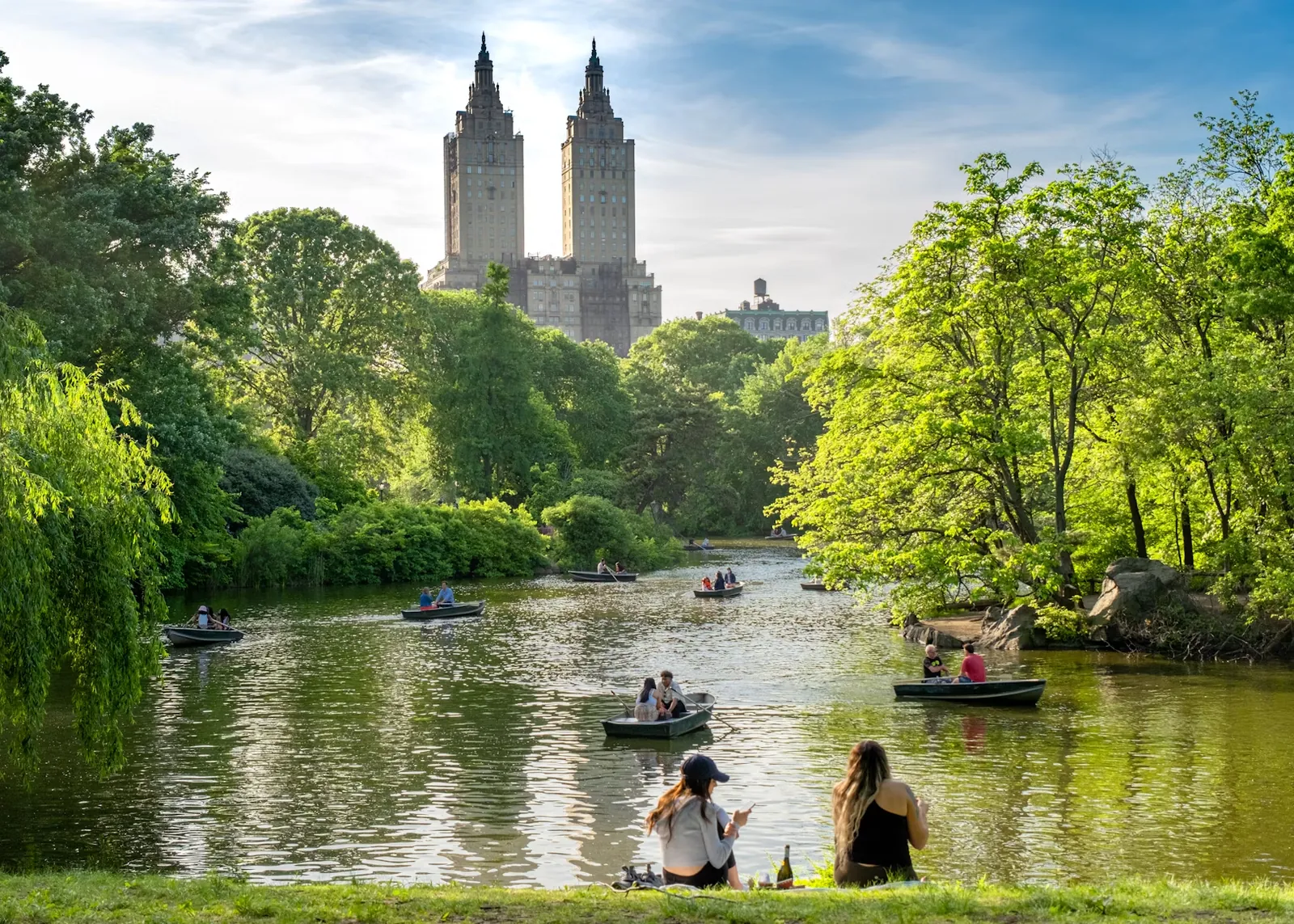
Central Park welcomes picnics, photography, jogging, ball games on the lawns, and quiet enjoyment of the landscape, but a handful of activities are off-limits to protect the park and its wildlife. Swimming and wading in the lakes, ponds, and other water bodies is not allowed — the water is part of a managed habitat, not a bathing area. Alcohol, drones, and hammocks are also prohibited parkwide, and feeding the ducks, squirrels, raccoons, and other wildlife is discouraged because human food harms their health.
The table below summarizes the rules most visitors ask about. These reflect NYC Parks regulations and Conservancy guidance as of 2026; because rules can be updated, treat posted signs and Park staff as the final word, and confirm anything you are unsure about before your visit.
| Activity | Allowed? | Key detail |
|---|---|---|
| Dogs | Yes, with limits | Leashed 9:00 am–9:00 pm; off-leash 6:00–9:00 am and 9:00 pm–1:00 am in designated areas |
| Swimming or wading | No | Lakes, ponds, and water bodies are managed habitats, not for bathing |
| Alcohol | No | Not permitted anywhere in the park |
| Drones | No | Drones and model aircraft are prohibited |
| Barbecuing | Limited | Only on Memorial Day, July 4th, and Labor Day, in non-restricted areas; no propane |
| Amplified sound or large events | Permit required | A special event permit is needed to reserve space or for groups of about 20 or more |
| Feeding wildlife | Discouraged | Human food harms animals; please do not feed ducks, squirrels, or others |
Dogs in Central Park
Central Park is famously dog-friendly, and well-behaved dogs are welcome on most lawns and paths — but the leash rules are specific. Dogs must be leashed from 9:00 am to 9:00 pm, and a beloved local tradition allows off-leash play during the quieter hours of 6:00 am to 9:00 am and again from 9:00 pm to 1:00 am, in areas where it is permitted. Owners are expected to carry the leash at all times and clean up after their pet.
Some of the park's most sensitive spots are leash-only around the clock and never open to off-leash dogs. These include the Conservatory Garden, Strawberry Fields, the Bridle Path, Cedar Hill, Shakespeare Garden, Turtle Pond Lawn, and the woodlands such as the Ramble and North Woods. Dogs are also kept out of fountains, the lakes, playgrounds, and sports fields. Following these boundaries keeps gardens intact, protects ground-nesting birds, and keeps the off-leash privilege available for everyone.
Cycling and e-scooter etiquette on the car-free drives
Central Park's main loop drive has been car-free since 2018, which makes it a wonderful place to ride — but it is shared with walkers, runners, and other cyclists, so etiquette matters. Cyclists travel counterclockwise on the drives, and pedestrians have the right of way at all times. At crosswalks, riders are expected to slow down, yield, and stop for anyone crossing; the park has replaced several signals with flashing-yellow yield indicators to reinforce this.
Bikes and e-scooters belong on the loop drive, not on the footpaths — cycling is not permitted on pedestrian-only paths, aside from a couple of marked shared paths around 96th Street and West 106th–108th Streets. A speed limit is posted on the drives and applies to bikes, e-bikes, and e-scooters alike; the exact number has been adjusted recently and remains the subject of debate, so watch for current signs and ride well within them. Our guided pedicab, bike, and e-scooter tours keep you on the legal routes and the right side of these rules.
- Ride counterclockwise on the loop drive and keep to the marked bike lane where one exists.
- Yield to pedestrians everywhere, and stop completely for anyone in or entering a crosswalk.
- Stay off pedestrian-only paths; use the loop drive or the designated shared paths instead.
- Watch posted speed-limit signs for bikes, e-bikes, and e-scooters and ride within them.
- Use a bell or a friendly call to pass, and slow down in crowded areas near Bethesda Terrace and the Mall.
Staying safe and who to call
Central Park is one of the safer parts of Manhattan, patrolled by its own dedicated NYPD command, the Central Park Precinct, whose station house sits on the 86th Street Transverse Road. Even so, the same city smarts apply: during the day the park is busy and welcoming, while late at night it is best to stay on well-lit, well-trafficked paths and out of the wooded interior. Keep valuables out of sight and stay aware of your surroundings, just as you would anywhere in the city.
In any emergency — a medical issue, a crime, or someone in danger — call 911 immediately; this is the fastest way to reach police, fire, or paramedics. For non-urgent matters, the Central Park Precinct can be reached at (212) 570-4820, and the Urban Park Rangers, who handle wildlife and nature questions, are at (212) 360-2774. For quality-of-life concerns and city services, dial 311. Lampposts throughout the park carry numbered location markers that help responders find you quickly.
| Situation | Who to contact | Number |
|---|---|---|
| Any emergency (medical, crime, fire) | 911 | 911 |
| Police, non-emergency | Central Park Precinct (86th St Transverse) | (212) 570-4820 |
| Wildlife and nature questions | Urban Park Rangers | (212) 360-2774 |
| Quality-of-life and city services | NYC 311 | 311 |
Seasonal and weather safety
Central Park is a year-round destination, but the weather shapes how you should prepare. In summer, New York heat and humidity can be intense, so carry water, wear sun protection, and take breaks in the shade of spots like the Ramble or the Mall's elm canopy; drinking fountains are spread across the park. On hot or stormy days, avoid sheltering under isolated trees during thunderstorms and head for a solid building if lightning threatens.
Winter brings its own considerations: paths near the lakes and in shaded areas can ice over, so wear proper footwear, and never walk out onto frozen water — the ice is not monitored or safe. After heavy snow or rain, some trails and the woodland paths may be muddy or temporarily closed for safety or restoration. Whatever the season, dress in layers, check the forecast before a long visit, and give yourself extra time. A guided tour is an easy way to enjoy the park comfortably when conditions are less than perfect.
Frequently asked questions
What are Central Park's hours?
Central Park is open to the public daily from 6:00 am to 1:00 am, according to the Central Park Conservancy. Entry is free. Individual attractions like the zoo, gardens, and ice rinks keep their own seasonal hours, so check those separately.
Is Central Park safe?
Yes — Central Park is one of the safer areas of Manhattan and has its own NYPD command, the Central Park Precinct. It is busy and welcoming by day. After dark, stick to well-lit, well-trafficked paths, avoid the wooded interior, and keep valuables out of sight. In any emergency, call 911.
Can dogs go off-leash in Central Park?
Yes, during designated off-leash hours of 6:00–9:00 am and 9:00 pm–1:00 am in permitted areas. From 9:00 am to 9:00 pm dogs must be leashed. Some places, including the Conservatory Garden, Strawberry Fields, and the woodlands, are leash-only at all times and never open to off-leash dogs.
Can you swim in the lakes in Central Park?
No. Swimming and wading in Central Park's lakes, ponds, and other water bodies is not permitted — they are managed natural habitats, not bathing areas. In summer the park's public outdoor pool (Lasker, when open) is the place to swim; confirm its season and hours before you go.
What are the rules for biking and e-scooters in Central Park?
Ride counterclockwise on the car-free loop drive, yield to pedestrians at all times, and stop for anyone in a crosswalk. Bikes and e-scooters are not allowed on pedestrian-only paths, except a few marked shared paths. A posted speed limit applies to bikes, e-bikes, and e-scooters, so follow the current signs.
Who do I call in an emergency in Central Park?
Call 911 for any emergency — medical, crime, or fire. For non-urgent police matters, the Central Park Precinct is at (212) 570-4820. The Urban Park Rangers handle wildlife questions at (212) 360-2774, and 311 covers city services. Numbered lampposts help responders locate you.
See it from the seat
The best way to know Central Park is to ride through it. Pedicab, bike, e-scooter, or on foot — book in under a minute.